
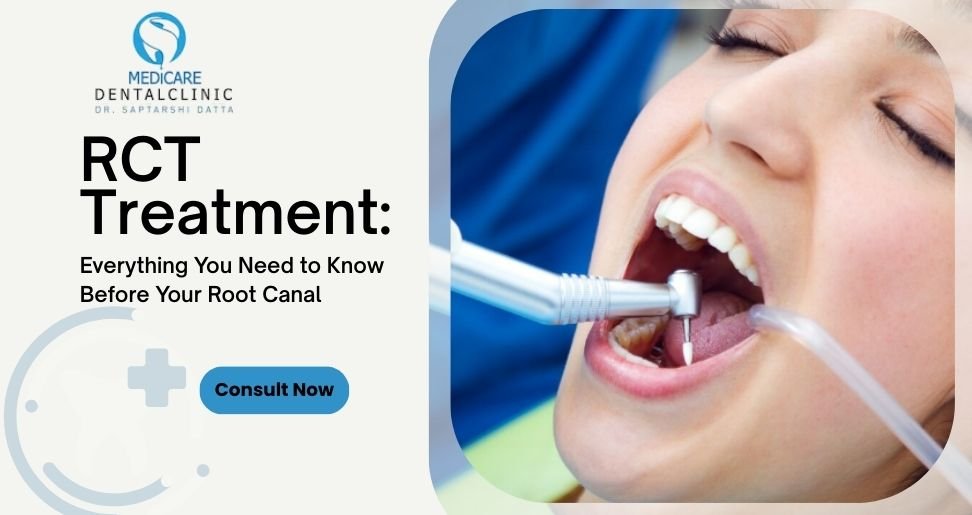
Tooth pain has a way of interrupting everything — your sleep, your meals, even your mood. When your dentist recommends RCT treatment, it often raises immediate questions like: Is root canal painful? or How long is the recovery?
At Medicare Dental Clinic, we believe clarity removes fear. This guide is crafted to give you a complete, easy-to-understand overview of root canal treatment — from early symptoms to recovery and real before-and-after changes — in a way that answers what people are actively searching online today.
What Exactly Is RCT Treatment?
RCT (Root Canal Treatment) is a restorative dental procedure performed to save a tooth that has severe internal damage or infection. Inside every tooth is a soft core known as pulp. This pulp contains nerves and blood vessels that help the tooth grow during development.
When bacteria penetrate deep into the tooth due to decay, cracks, or trauma, the pulp becomes inflamed or infected. If untreated, the infection can spread beyond the tooth root and affect surrounding bone.
Instead of removing the entire tooth, RCT treatment eliminates the infection while preserving your natural tooth structure.
How to Know If You Need a Root Canal
Many patients ignore early warning signs. Here’s how to recognize when your tooth might require RCT treatment:
1. Continuous or Spontaneous Tooth Pain
Pain that occurs without any trigger — especially at night — is a major red flag.
2. Lingering Sensitivity
If hot coffee or cold water causes discomfort that lasts more than 20–30 seconds, the pulp may be damaged.
3. Swollen or Bleeding Gums Near One Tooth
Localized gum inflammation can indicate infection at the root.
4. Pressure Pain While Chewing
Discomfort when biting down may signal nerve damage.
5. Tooth Appearing Darker Than Others
Internal nerve damage can cause discoloration over time.
If you notice one or more of these symptoms, an evaluation at Medicare Dental Clinic can determine whether RCT treatment is necessary.
Is Root Canal Painful? Let’s Clear the Confusion
One of the most searched dental questions is: Is root canal painful?
The reality is quite the opposite. Root canal treatment is performed under local anesthesia, meaning the area is completely numb during the procedure.
Why the Fear Exists
Years ago, limited anesthesia and outdated tools caused discomfort. Today’s advanced dental techniques are precise and minimally invasive.
What You Actually Experience
- Slight pinch during anesthesia
- Pressure sensation during cleaning
- Mild soreness afterward for a few days
In fact, most patients feel relief immediately because the infection causing intense pain is removed.
What Happens During RCT Treatment? (Step-by-Step)
Understanding the procedure reduces anxiety. Here’s what typically happens:
Diagnosis & Digital Imaging
Your dentist examines the tooth and takes X-rays to evaluate infection depth and canal structure.
Numbing the Area
Local anesthesia ensures a pain-free experience.
Removing the Infected Tissue
A tiny opening is created in the tooth to access and remove infected pulp.
Cleaning & Shaping the Canals
Special instruments disinfect and shape the root canals to remove bacteria completely.
Sealing the Tooth
The cleaned canals are filled with a durable material and sealed to prevent reinfection.
Final Restoration
In most cases, a dental crown is placed to restore strength and functionality.
Root Canal Before and After: What Really Changes?
Before RCT Treatment:
- Sharp or throbbing pain
- Swelling around gums
- Sensitivity to temperature
- Possible abscess formation
- Infection visible in X-rays
After RCT Treatment:
- Pain eliminated
- Infection cleared
- Normal chewing restored
- Tooth preserved instead of extracted
- Improved oral function
The most significant transformation is relief — both physically and mentally.
Root Canal Recovery Time: How Long Does It Take?
Recovery is often quicker than people expect.
First 24–48 Hours
- Minor tenderness
- Sensitivity while biting
- Manageable discomfort controlled by medication
3–5 Days After Procedure
Most patients return to completely normal eating and speaking patterns.
Full Healing
The surrounding bone and tissue may take a few weeks to fully stabilize internally, but daily activities are unaffected.
Recovery Tips:
- Avoid chewing hard foods on the treated side
- Maintain good oral hygiene
- Attend follow-up appointments
- Get the permanent crown placed on time
Why Saving Your Tooth Is Better Than Extraction
When comparing RCT treatment with extraction:
| Root Canal | Extraction |
|---|---|
| Preserves natural tooth | Tooth completely removed |
| Maintains jaw alignment | May cause shifting of teeth |
| Natural bite force retained | May require implant/bridge |
| Lower long-term cost | Replacement increases cost |
Keeping your natural tooth is almost always the healthiest long-term choice.
What Happens If You Delay RCT Treatment?
Ignoring infection can lead to:
- Spread of bacteria into jawbone
- Severe facial swelling
- Bone loss around the tooth
- Emergency extraction
- Systemic health complications
Prompt RCT treatment prevents these serious consequences.
How Long Does a Root Canal Last?
With proper care and crown placement, a treated tooth can last decades — sometimes a lifetime. The key factors include:
- Oral hygiene habits
- Regular dental checkups
- Avoiding teeth grinding
- Timely crown restoration
Modern Technology Makes RCT Treatment Easier
At Medicare Dental Clinic, advanced tools improve precision and comfort:
- Digital radiography for accurate diagnosis
- Rotary endodontic instruments for efficient cleaning
- High-quality sterilization protocols
- Precision crown fitting technology
These innovations reduce chair time and enhance success rates.
Frequently Asked Questions:
Can I Eat After a Root Canal?
Yes, but wait until numbness fades. Soft foods are recommended initially.
Can Infection Return After RCT?
Rarely, but it can happen if the crown breaks or oral hygiene is poor.
Do I Always Need a Crown After RCT?
In most back teeth, yes. Front teeth may not always require one depending on structure.
Is Root Canal Safe?
Yes. It is a routine dental procedure with a high success rate worldwide.
Signs You Should Book an Appointment Immediately
Seek urgent care if you experience:
- Severe night-time tooth pain
- Swelling extending to cheek or jaw
- Fever with dental pain
- Persistent bad taste in mouth
- Gum abscess
Early diagnosis makes treatment simpler and faster.
The Emotional Side of Tooth Pain
Dental anxiety is real. Many patients delay RCT treatment due to fear of discomfort. But untreated infection causes far more distress than the procedure itself.
At Medicare Dental Clinic, patient comfort is our priority. From gentle anesthesia techniques to clear communication, we ensure your experience is calm and reassuring.
Final Thoughts: Should You Worry About RCT Treatment?
RCT treatment is not something to fear — it is something that protects your smile.
If you’re asking:
- Is root canal painful?
- What is the root canal recovery time?
- How do I know if I need a root canal?
The answer is simple: modern dentistry makes it safe, comfortable, and highly effective.
Delaying treatment only increases discomfort and risk. Acting early preserves your natural tooth and restores your quality of life.
Take the First Step Toward Pain Relief
If you are experiencing symptoms or have been advised to undergo RCT treatment, schedule a consultation at Medicare Dental Clinic today.
Relief is closer than you think — and your natural smile is worth saving.
Read More: