When it comes to restoring damaged or decayed teeth, modern dentistry offers several effective options. Among the most common are dental fillings and inlays. Understanding the difference between dental inlay vs filling can help you make an informed decision about your oral health. Both treatments are designed to restore the function and structure of a tooth, but they differ in materials, durability, procedure, and suitability.
In this blog, we will explore everything you need to know about fillings, Dental Inlays and Onlays, and how they compare to crowns, helping you choose the best solution for your dental needs.
What Is a Dental Filling?
A dental filling is a common treatment used to repair minor tooth decay or damage. During the procedure, the dentist removes the decayed portion of the tooth and fills the cavity with a material such as composite resin, amalgam, gold, or ceramic.
Key Features of Fillings:
- Ideal for small to moderate cavities
- Completed in a single visit
- Cost-effective solution
- Materials can match the natural tooth color (composite fillings)
Fillings are widely used because they are quick and effective. However, they may not always be the best option for larger areas of damage.
What Is a Dental Inlay?
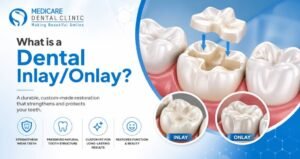
A dental inlay is a custom-made restoration designed to fit into the grooves of a tooth without covering the cusps. It is typically made from porcelain, composite resin, or gold and is fabricated in a dental lab before being bonded to the tooth.
The inlay dental procedure involves two visits in most cases:
- The dentist removes decay and takes an impression of the tooth.
- The custom inlay is created and later bonded to the tooth.
Key Features of Dental Inlays:
- Custom-fit for precision
- More durable than standard fillings
- Preserve more natural tooth structure
- Resistant to staining and wear
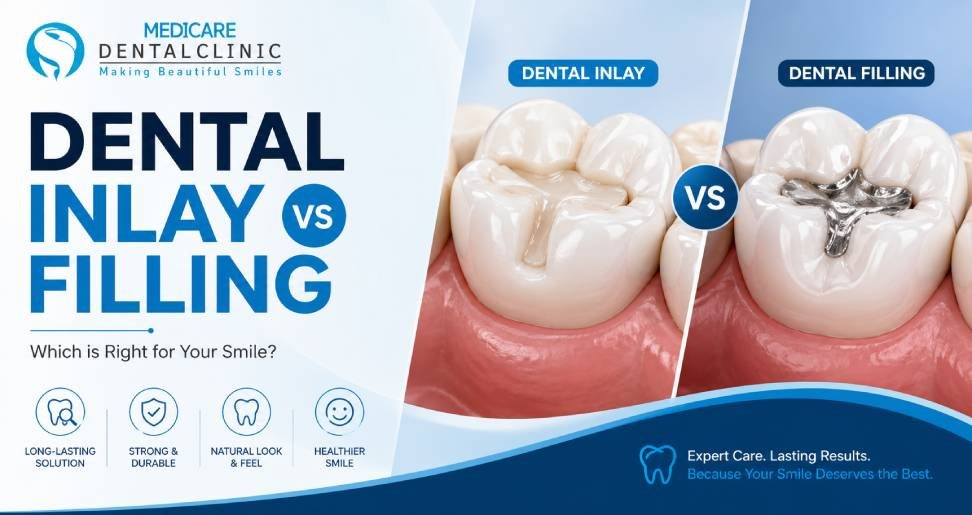
Dental Inlay vs Filling: Key Differences
Understanding the core differences between these two treatments is essential when deciding which one is right for you.
1. Size of Damage
- Fillings are suitable for small cavities.
- Inlays are used when the cavity is too large for a filling but not severe enough for a crown.
2. Durability
- Fillings typically last 5–10 years.
- Inlays can last 10–20 years with proper care.
3. Strength
- Fillings may weaken over time, especially in larger cavities.
- Inlays strengthen the tooth structure due to their precise fit.
4. Procedure
- Fillings are completed in one visit.
- The inlay dental procedure usually requires two visits.
5. Cost
- Fillings are more affordable.
- Inlays are more expensive but offer long-term value.
What Are Dental Inlays and Onlays?
Dental Inlays and Onlays are both indirect restorations, meaning they are created outside the mouth and then bonded to the tooth.
- Inlays fit within the grooves of the tooth.
- Onlays extend over one or more cusps of the tooth.
These restorations are often referred to as “partial crowns” because they cover more surface area than fillings but less than full crowns.
Dental Inlay Onlay vs Crown: What’s the Difference?
When comparing dental inlay onlay vs crown, the primary difference lies in how much of the tooth is covered.
Dental Inlays/Onlays:
- Preserve more natural tooth structure
- Ideal for moderate damage
- Less invasive than crowns
Dental Crowns:
- Cover the entire tooth
- Used for severe damage or weakened teeth
- Provide maximum protection
If your tooth still has a strong structure, an inlay or onlay is often the preferred choice. However, if the tooth is significantly damaged, a crown may be necessary.
Advantages of Dental Inlays Over Fillings
Choosing an inlay over a filling comes with several benefits:
1. Long-Lasting Solution
Inlays are made from durable materials like porcelain, making them resistant to wear and tear.
2. Better Fit
Since they are custom-made, inlays fit perfectly into the tooth, reducing the risk of leakage and further decay.
3. Aesthetic Appeal
Porcelain inlays closely match the natural color of your teeth, offering a seamless look.
4. Strengthens the Tooth
Unlike fillings, which may weaken over time, inlays reinforce the tooth structure.
When Is a Filling the Better Option?
Despite the advantages of inlays, fillings are still a great choice in certain situations:
- Small cavities with minimal damage
- Patients looking for a quick, affordable solution
- Temporary restorations
Fillings are especially useful for early-stage decay where extensive restoration is not required.
The Inlay Dental Procedure Explained
The inlay dental procedure is straightforward but involves precision:
Step 1: Examination and Preparation
The dentist examines the tooth and removes any decay.
Step 2: Impression
An impression of the tooth is taken to create a custom inlay.
Step 3: Temporary Filling
A temporary filling may be placed while the inlay is being prepared.
Step 4: Placement
Once ready, the inlay is bonded to the tooth using strong dental cement.
This process ensures a perfect fit and long-lasting results.
Which Option Should You Choose?
The choice between a dental inlay and a filling depends on several factors:
- Extent of tooth damage
- Budget
- Aesthetic preferences
- Long-term dental goals
If you’re dealing with a small cavity, a filling is usually sufficient. However, for larger cavities where durability and strength are important, an inlay is often the better investment.
Tips for Maintaining Your Dental Restoration
Regardless of whether you choose a filling or an inlay, proper care is essential:
- Brush twice daily with fluoride toothpaste
- Floss regularly
- Avoid chewing hard objects
- Visit your dentist for regular check-ups
Good oral hygiene can significantly extend the lifespan of your dental restoration.
Conclusion
Understanding the differences between dental inlay vs filling can help you make the right decision for your oral health. While fillings are quick and cost-effective, inlays offer superior durability, strength, and aesthetics for more extensive damage.
Additionally, knowing how Dental Inlays and Onlays compare with crowns ensures that you choose the most suitable treatment based on your dental condition. Whether you opt for a filling or go through an inlay dental procedure, consulting a qualified dentist is the best way to determine the ideal solution for your smile.
By choosing the right treatment and maintaining proper oral care, you can ensure a healthy, long-lasting smile for years to come.
Have A Look :-