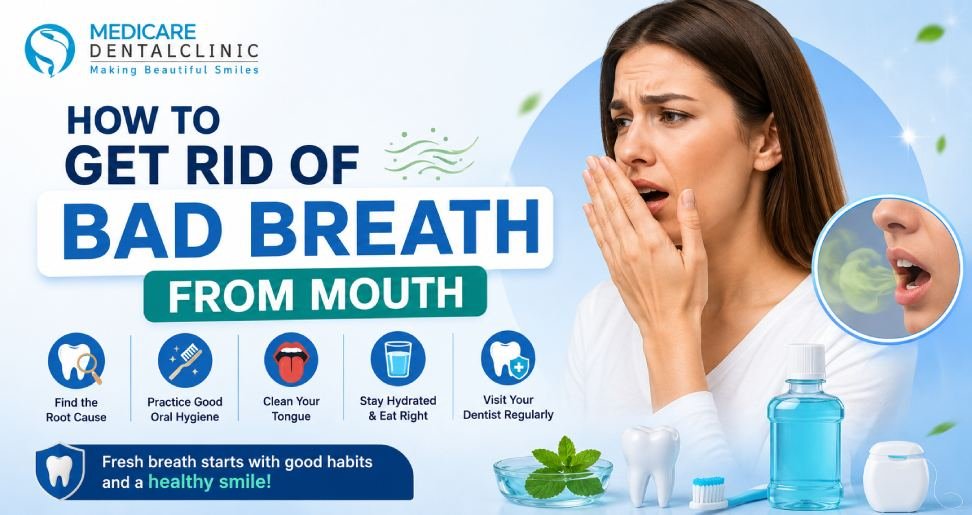
Bad breath, also known as halitosis, is a common oral health issue that can affect anyone. It can lead to embarrassment, reduced confidence, and discomfort in social situations. While occasional bad breath is normal, persistent mouth odor may indicate an underlying oral or health problem that needs attention.
If you have ever wondered how to get rid of bad breath from mouth, this guide will help you understand the causes, effective remedies, and professional treatments available to keep your breath fresh and your mouth healthy.
What Causes Bad Breath?
Bad breath develops when bacteria in the mouth break down food particles and release unpleasant-smelling sulfur compounds. Several factors can contribute to this condition, including:
1. Poor Oral Hygiene
When brushing and flossing are neglected, food particles remain trapped between teeth and along the gumline. These particles attract bacteria, leading to foul-smelling breath.
2. Gum Disease
Gingivitis and periodontitis can cause bacterial buildup beneath the gums, resulting in persistent bad breath.
3. Dry Mouth
Saliva helps wash away bacteria and food debris. Reduced saliva production, often caused by dehydration, medications, or mouth breathing, can increase bad breath.
4. Food Choices
Strong-smelling foods such as garlic, onions, and certain spices can temporarily affect breath odor.
5. Tobacco Use
Smoking and chewing tobacco not only create an unpleasant smell but also increase the risk of gum disease and dry mouth.
6. Medical Conditions
Digestive disorders, sinus infections, diabetes, and respiratory infections can sometimes contribute to chronic bad breath.
Why My Mouth Smells Bad Even After Brushing?
Many people ask, “Why my mouth smells bad even after brushing?” The answer often lies beyond the teeth.
Some possible reasons include:
- Bacteria accumulating on the tongue
- Untreated gum disease
- Tooth decay or dental infections
- Dry mouth
- Poorly cleaned dentures or dental appliances
- Digestive issues
- Sinus or throat infections
Brushing alone may not eliminate all sources of odor. A comprehensive oral care routine and professional dental examination are often necessary to identify the root cause.
How to Get Rid of Bad Breath Instantly
If you need a quick solution before a meeting or social event, these methods can help how to get rid of bad breath instantly:
Drink Water
Water helps remove food particles and stimulates saliva production, reducing bacterial growth.
Chew Sugar-Free Gum
Sugar-free gum encourages saliva flow, which naturally cleans the mouth and neutralizes odor-causing bacteria.
Clean Your Tongue
A significant number of bacteria reside on the tongue’s surface. Using a tongue scraper can instantly improve breath freshness.
Rinse with Mouthwash
An antibacterial mouthwash can temporarily reduce bacteria and provide fresh breath.
Eat Crunchy Fruits and Vegetables
Apples, carrots, and celery help clean the mouth naturally while increasing saliva production.
While these methods offer temporary relief, long-term solutions require addressing the underlying cause.
Effective Bad Breath Remedies
There are several proven bad breath remedies that can help maintain fresh breath consistently.
Brush Properly Twice Daily
Use fluoride toothpaste and brush for at least two minutes, covering all tooth surfaces.
Floss Every Day
Flossing removes food debris and plaque from areas a toothbrush cannot reach.
Use a Tongue Cleaner
Daily tongue cleaning helps eliminate bacteria responsible for unpleasant odors.
Stay Hydrated
Drinking adequate water throughout the day prevents dry mouth and supports oral health.
Limit Odor-Causing Foods
Reducing the consumption of garlic, onions, and highly processed foods may help improve breath.
Replace Your Toothbrush Regularly
Dentists recommend changing your toothbrush every three to four months.
Visit Your Dentist Regularly
Professional cleanings remove tartar buildup and detect dental issues that may be causing bad breath.
How to Eliminate Bad Breath from Stomach
Some people believe their bad breath originates from the stomach. If you’re searching for how to eliminate bad breath from stomach, it’s important to understand that most cases of bad breath actually start in the mouth.
However, certain digestive conditions can contribute to unpleasant breath, including:
- Acid reflux (GERD)
- Stomach infections
- Digestive disorders
- Poor digestion
To reduce stomach-related bad breath:
Eat Balanced Meals
A healthy diet supports digestion and minimizes odor-producing digestive issues.
Avoid Skipping Meals
Long periods without eating can cause dry mouth and unpleasant breath.
Manage Acid Reflux
Avoid trigger foods such as spicy, fried, and acidic foods if you suffer from reflux.
Maintain Good Hydration
Proper hydration supports both digestive and oral health.
Seek Medical Evaluation
Persistent bad breath despite excellent oral hygiene may require medical assessment to identify digestive or systemic causes.
Professional Treatments for Chronic Bad Breath
If bad breath continues despite following home care measures, professional treatment may be necessary.
Dental Cleaning
Plaque and tartar accumulation often contribute to persistent mouth odor. Professional cleanings help eliminate these deposits.
Treatment for Gum Disease
Advanced gum infections require specialized treatment to remove bacteria and restore gum health.
Cavity Treatment
Decayed teeth can trap food and bacteria, causing foul odors. Restorative dental treatments can solve the issue.
Treatment for Oral Infections
Dental abscesses and other infections require prompt treatment to eliminate both odor and potential health risks.
At Medicare Dental Implants Clinic, experienced dental professionals perform thorough oral examinations to identify the exact cause of bad breath. Whether the issue stems from gum disease, cavities, plaque buildup, or other oral health concerns, personalized treatment plans can help restore fresh breath and improve overall oral health.
Daily Habits to Prevent Bad Breath
Prevention is always better than treatment. Follow these simple habits to maintain fresh breath every day:
- Brush twice daily
- Floss regularly
- Clean your tongue
- Drink plenty of water
- Avoid tobacco products
- Schedule regular dental checkups
- Eat a balanced diet
- Replace your toothbrush routinely
- Treat dental problems promptly
These practices not only help prevent bad breath but also contribute to healthier teeth and gums.
When Should You See a Dentist?
You should seek professional dental care if:
- Bad breath persists for several weeks
- You notice bleeding gums
- Your mouth feels constantly dry
- You have tooth pain or sensitivity
- You experience a bad taste that does not go away
Persistent bad breath is often a sign that an underlying issue requires professional attention.
Conclusion
Understanding how to get rid of bad breath from mouth starts with identifying the cause. While occasional bad breath can be managed with proper oral hygiene and simple lifestyle changes, chronic halitosis often requires professional evaluation.
If you are concerned about persistent mouth odor, wondering why my mouth smells bad even after brushing, searching for bad breath remedies, looking for how to get rid of bad breath instantly, or exploring how to eliminate bad breath from stomach, a professional dental assessment can help uncover the real cause.
Medicare Dental Implants Clinic offers comprehensive dental examinations, preventive care, and advanced treatments designed to improve oral health and eliminate the causes of bad breath. With proper care and expert guidance, you can enjoy fresher breath, greater confidence, and a healthier smile.