When it comes to restoring damaged teeth, modern dentistry offers several effective options. Among the most commonly recommended treatments are inlays, onlays, and crowns. If you’re confused about dental inlay onlay vs crown, you’re not alone. Each option serves a specific purpose depending on the extent of tooth damage, durability needs, and aesthetic preferences. In this blog, we’ll break down everything you need to know to make an informed decision.
What Are Dental Inlays and Onlays?
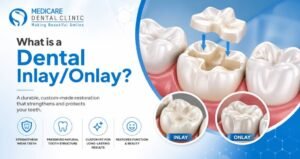
Dental Inlays and Onlays are indirect restorations used to repair teeth that have mild to moderate damage. They are typically made from porcelain, composite resin, or gold and are custom-designed in a dental lab before being bonded to the tooth.
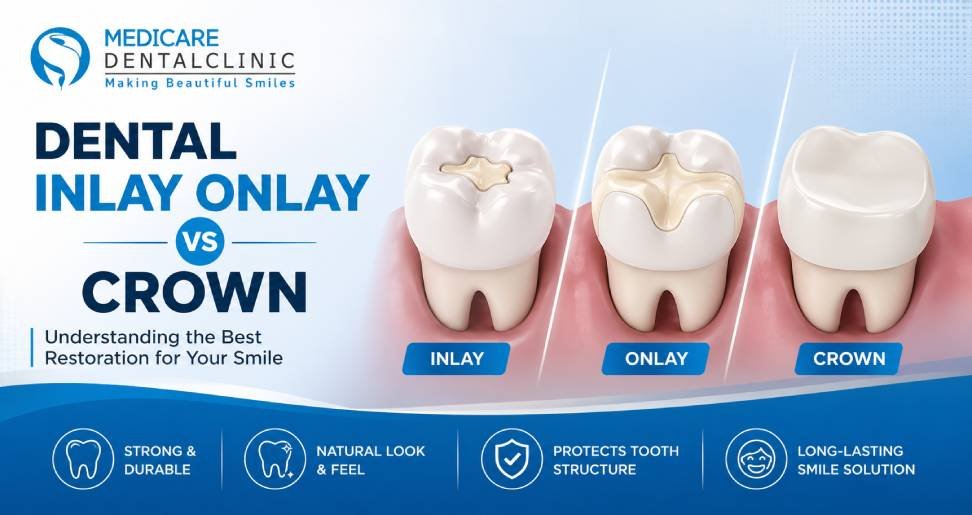
- Inlays: Fit within the grooves of a tooth and do not cover the cusps (the raised edges).
- Onlays: Extend over one or more cusps, covering a larger portion of the tooth.
These restorations are often recommended when a simple filling isn’t sufficient but a full crown isn’t necessary.
What Is a Dental Crown?
A dental crown is a cap that completely covers a damaged or weakened tooth. It restores the tooth’s shape, size, strength, and appearance. Crowns are usually made from materials like porcelain, ceramic, metal, or a combination of these.
Dentists typically recommend crowns for:
- Severely decayed teeth
- Cracked or fractured teeth
- Teeth that have undergone root canal treatment
- Cosmetic enhancements
Dental Inlay Onlay vs Crown: Key Differences
Understanding the differences between these treatments is essential for choosing the right option.
1. Coverage Area
- Inlays/Onlays: Partial coverage; preserve more of the natural tooth structure.
- Crowns: Full coverage; the entire tooth is reshaped and capped.
2. Tooth Preservation
- Inlays and onlays are more conservative and retain healthy tooth material.
- Crowns require significant reshaping of the tooth.
3. Strength and Durability
- Inlays and onlays are strong but best for moderate damage.
- Crowns provide maximum protection and are ideal for severely damaged teeth.
4. Aesthetic Appeal
- Both options offer excellent aesthetics, especially porcelain restorations.
- Crowns provide a uniform appearance, making them ideal for visible teeth.
5. Cost Factor
- Inlays and onlays are generally less expensive than crowns.
- Crowns cost more due to the extent of coverage and materials used.
Dental Inlay vs Filling: What’s the Difference?
When comparing dental inlay vs filling, the main differences lie in durability and fabrication.
- Fillings are applied directly into the cavity during a single dental visit.
- Inlays are custom-made in a lab, ensuring a precise fit and better strength.
Inlays are more durable and resistant to wear compared to traditional fillings, making them a long-term solution for moderate tooth decay.
The Inlay Dental Procedure Explained
The inlay dental procedure typically involves two visits:
First Visit
- The dentist removes decay or damaged portions of the tooth.
- An impression of the tooth is taken.
- A temporary filling may be placed.
Second Visit
- The custom inlay or onlay is fitted and bonded to the tooth.
- Final adjustments are made for comfort and bite alignment.
This process ensures a precise fit and long-lasting restoration.
When Should You Choose Inlays or Onlays?
You may benefit from Dental Inlays and Onlays if:
- You have moderate tooth decay
- Your tooth structure is still largely intact
- You want a conservative and durable restoration
- You prefer a more natural-looking solution
When Is a Crown the Better Option?
A dental crown is often the best choice when:
- The tooth is severely damaged or weakened
- There is a large cavity that cannot support an inlay or onlay
- The tooth has undergone a root canal
- You need maximum protection and strength
Pros and Cons of Each Option
Inlays and Onlays
Pros:
- Preserve natural tooth structure
- Stronger than fillings
- Long-lasting and stain-resistant
Cons:
- Require multiple visits
- Not suitable for severe damage
Crowns
Pros:
- Provide full protection
- Extremely durable
- Suitable for extensive damage
Cons:
- Require more tooth removal
- Higher cost
How to Decide: Inlay, Onlay, or Crown?
The right choice depends on several factors:
- Extent of tooth damage
- Location of the tooth
- Budget
- Long-term dental goals
Your dentist will evaluate your oral condition and recommend the most suitable option.
Maintenance and Aftercare
No matter which restoration you choose, proper care is essential:
- Brush twice daily with fluoride toothpaste
- Floss regularly
- Avoid biting hard objects
- Visit your dentist for routine checkups
With good oral hygiene, both inlays/onlays and crowns can last for many years.
FAQs
Ans :- They are better for moderate damage because they preserve more natural tooth structure, but crowns are stronger for severe cases.
Ans :- With proper care, they can last 10–15 years or more.
Ans :- No, the procedure is usually done under local anesthesia, making it comfortable.
Ans :- Yes, especially if the filling is large or worn out, an inlay can provide better durability.
Ans :- Crowns are generally more expensive due to their full coverage and material requirements.
Conclusion
Choosing between dental inlay onlay vs crown doesn’t have to be confusing. Inlays and onlays are ideal for preserving healthy tooth structure in cases of moderate damage, while crowns offer complete protection for severely compromised teeth. Understanding the differences, benefits, and procedures involved will help you make a confident and informed decision.
If you’re unsure which treatment is right for you, consult a qualified dentist who can guide you based on your specific dental needs. Investing in the right restoration today can ensure a healthier, stronger smile for years to come.
Have A Look :-